Since November 2024, replying to a customer on WhatsApp has cost a business nothing. Templates were billed and replies were free, and plenty of support bots were designed around that line without anyone writing it down.
On 1 October 2026 the line moves. Meta will charge for every service message, meaning every free-form reply a bot or an agent sends inside the 24-hour customer service window. It will also charge again for utility templates sent inside that window, which have been free since July 2025.
I build on this platform for a living. At Acefone I work on the inbox where agents handle WhatsApp chats, WhatsApp calls and phone calls in one thread, and I run PostEngage, a WhatsApp automation product, on my own. Meta has changed the pricing model three times since PostEngage launched. This is the first change that should alter how you design a bot, not just how you read the invoice.
What changes on 1 October
Meta's wording on its pricing update page is short: "Effective October 1, 2026, Meta will charge on a per-message basis for service messages." The rate is not new. "By market, rates for service messages are the same as the rates for utility and authentication messages." And the one sentence that matters most for anyone at volume: "Meta does not offer volume tiers for service messages."
The second change is on the same page. Utility templates "sent in response to users within an open 24-hour customer service window" become billable again. That was the carve-out that made order updates and delivery confirmations free as long as the customer had written in first.
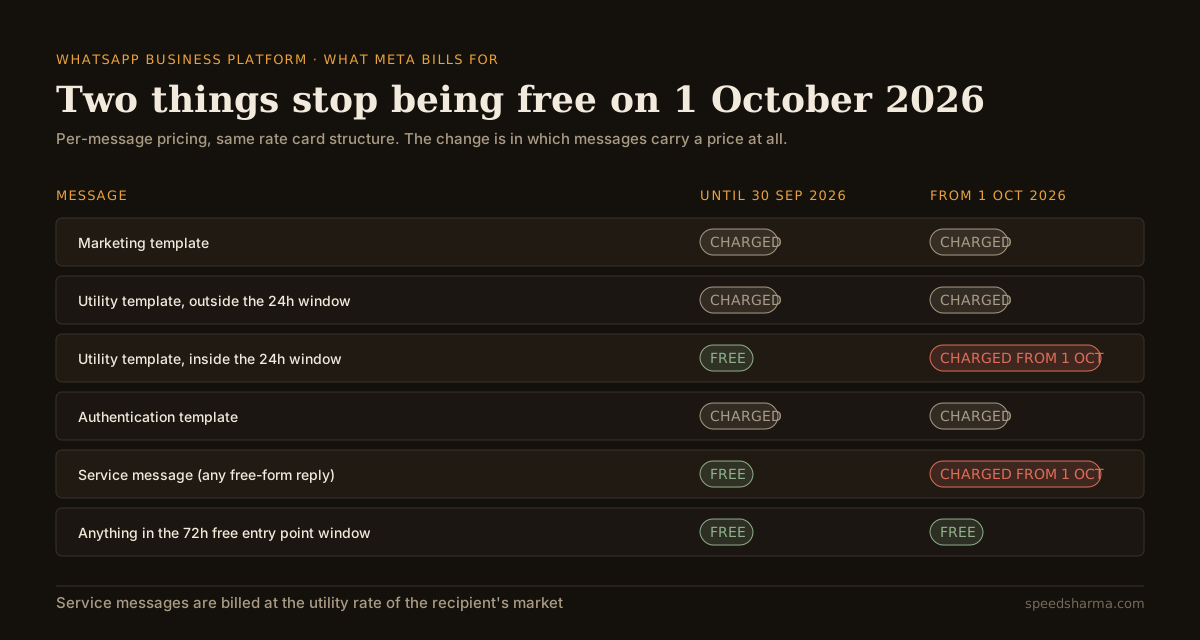
Three things did not change, and they matter as much:
- The free entry point window survives. If a customer arrives from a Click-to-WhatsApp ad or a Facebook Page call-to-action and you reply within 24 hours, everything you send for the next 72 hours is free.
- Inbound is still free. Meta never bills you for messages customers send.
- Only delivered messages are billed. A template that fails to deliver costs nothing at Meta's end.
Two more dates are worth putting in a calendar. 360dialog reports that accounts without a payment method on file by 30 September lose service message delivery on 1 October. And since 1 August 2026, Meta's own AI agent product, Meta Business Agent, is billed at $2 per million tokens. Meta estimates a typical message at 20,000 to 25,000 tokens, which is four to five cents a message. According to 360dialog, those messages are charged even inside the 72-hour free window.
The rates, market by market
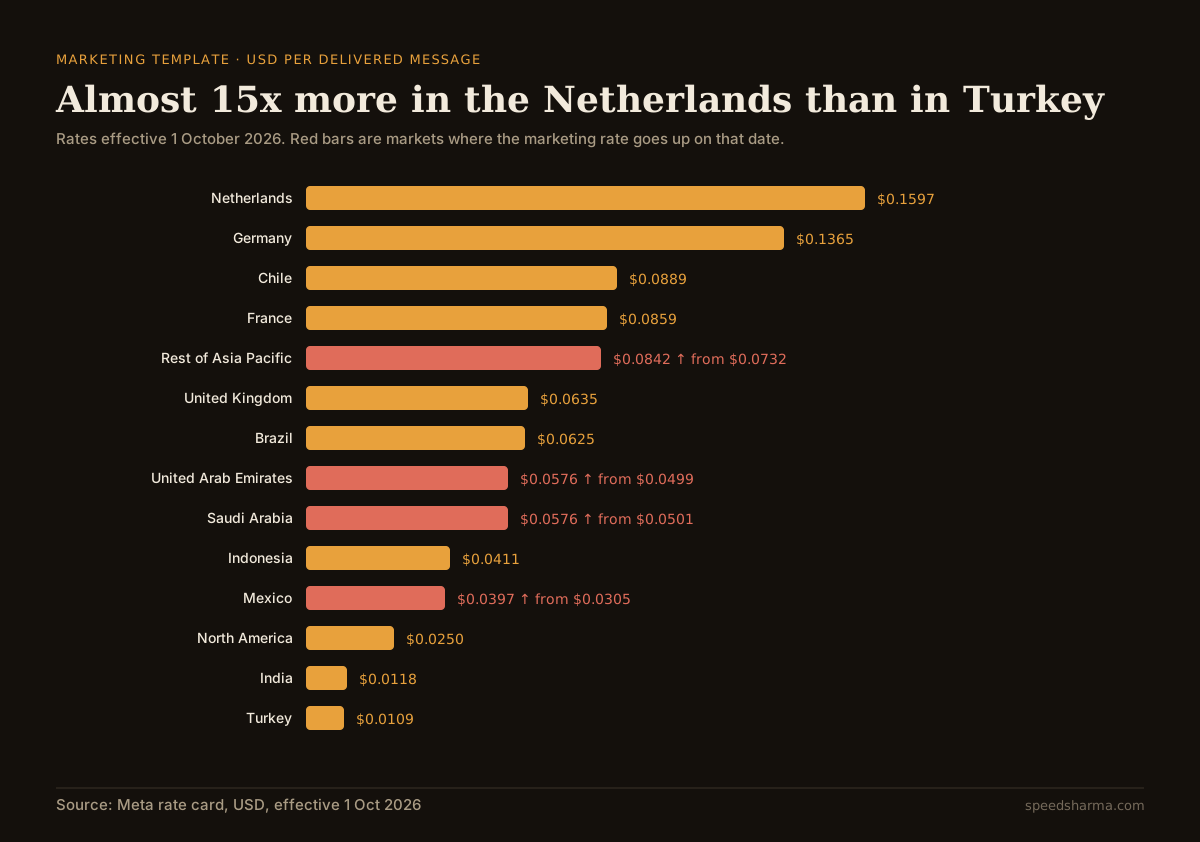
These come straight from Meta's rate card files, not from a provider's blog. They are in USD per delivered message, for the card that takes effect on 1 October 2026. In every market below, a service message, a utility template and an authentication template cost the same, so they share a column.
| Market | Marketing | Service, utility, auth | Also on 1 Oct |
|---|---|---|---|
| India | $0.0118 | $0.0014 | — |
| Indonesia | $0.0411 | $0.0250 | — |
| Pakistan | $0.0473 | $0.0150 | utility and auth up from $0.0100 |
| Brazil | $0.0625 | $0.0068 | — |
| Mexico | $0.0397 | $0.0085 | marketing up from $0.0305 |
| North America | $0.0250 | $0.0034 | — |
| United Kingdom | $0.0635 | $0.0220 | — |
| Germany | $0.1365 | $0.0550 | — |
| Netherlands | $0.1597 | $0.0500 | — |
| United Arab Emirates | $0.0576 | $0.0157 | marketing up from $0.0499 |
| Saudi Arabia | $0.0576 | $0.0107 | marketing up from $0.0501 |
| South Africa | $0.0379 | $0.0095 | utility and auth up from $0.0076 |
| Nigeria | $0.0516 | $0.0067 | — |
| Rest of Asia Pacific | $0.0842 | $0.0113 | marketing up from $0.0732 |
Nine markets that used to fall under a regional "Rest of" rate get their own cards on the same day: Bangladesh, Iraq, Kazakhstan, Kuwait, Morocco, Nepal, Oman, Sri Lanka and Ukraine. Kuwait lands at $0.044 for utility and service, which is more than the UK.
India has a rupee card too. Marketing is ₹0.8631 and utility, authentication and service are ₹0.115 each, before GST. Meta has also asked every Indian account to move to rupee billing by 31 December 2026, and warns of disruption from 1 January 2027 for accounts that have not.
Work out your own bill
Put your own monthly volumes in. The defaults describe a mid-sized Indian direct-to-consumer brand: a steady marketing calendar, order updates, OTPs, and a support bot doing most of the talking.
calculator · meta rate cards, 1 Jul 2026 and 1 Oct 2026
What your WhatsApp bill does on 1 October
where the money goes, from 1 October
Meta's fees only change on delivered messages; inbound messages are never billed by Meta. Volume tiers for utility and authentication are applied as graduated bands, the way Meta's tier table reads. Rates from Meta's rate card files, checked 12 Sep 2026.
The two numbers people usually get wrong are "utility inside the window" and "service replies". The first is any template you send while a chat is open, like the "your order has shipped" message that goes out while the customer is still asking about it. The second is every single bubble your bot or agent sends. Not conversations. Bubbles.
Every reply bubble is now a line item
Here is one ordinary support conversation, priced under the old rules and the new. Nothing in it is unusual. A customer asks where their order is, the bot answers in two messages, a human adds a line, a delivery template goes out, and a promo arrives a week later.
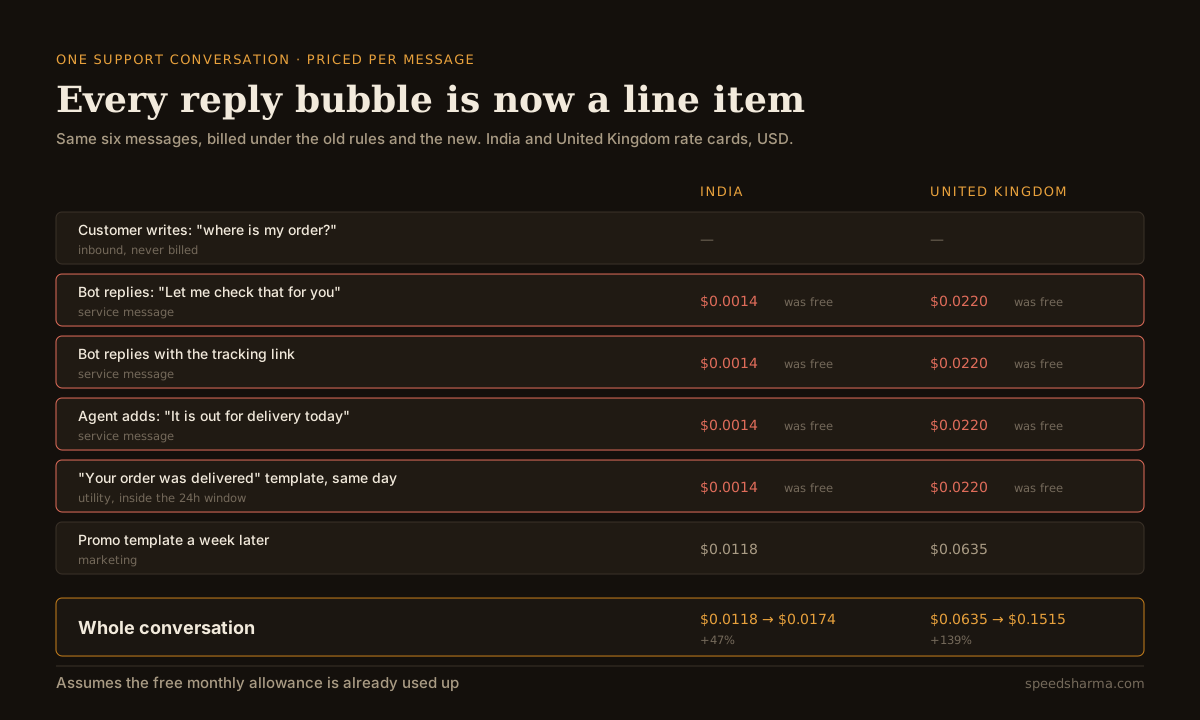
In India the increase looks small per conversation because India's utility rate is tiny. In Western Europe, where a utility message costs between $0.02 and $0.055, the same design decisions cost fifteen to forty times as much.
quick check
After 1 October, your bot answers an Indian customer with three separate messages inside the 24-hour window. What does Meta charge for those three replies?
Service messages are billed per message at the utility rate, which is $0.0014 in India. Three bubbles are three charges. Conversation-based billing ended in July 2025, and nothing about it comes back.
Four real-shaped bills
I ran four shapes of business through the same arithmetic the calculator uses. They are composites, not clients, picked because each one reacts to October differently.
- A. Indian D2C brand, direct on the Cloud API. 20,000 marketing, 10,000 utility outside the window, 15,000 inside it, 5,000 OTPs and 60,000 service replies a month, with 10% of chats coming from Click-to-WhatsApp ads.
- B. UK SaaS support desk. No marketing. 13,000 utility templates, 8,000 of them inside the window, 2,000 OTPs and 30,000 support replies. Priced direct and on Twilio.
- C. US fintech that mostly sends codes. 200,000 OTPs, 60,000 utility, 5,000 replies. Priced direct and on Twilio. No marketing line, because Meta does not currently deliver marketing templates to US numbers.
- D. Brazilian store with an FAQ bot. 30,000 bot conversations a month, plus 20,000 in-window utility and 15,000 marketing. Priced once with the bot answering in three messages and once with it answering in one.
| Business | Until 30 Sep | From 1 Oct | Change |
|---|---|---|---|
| A. Indian D2C, direct | $257.00 | $351.50 | +37% |
| B. UK support desk, direct | $154.00 | $990.00 | +543% |
| B. UK support desk, on Twilio | $504.00 | $1,340.00 | +166% |
| C. US fintech, direct | $830.00 | $881.00 | +6% |
| C. US fintech, on Twilio | $2,195.00 | $2,246.00 | +2% |
| D. Brazil bot, three bubbles | $937.50 | $1,685.50 | +80% |
| D. Brazil bot, one bubble | $937.50 | $1,277.50 | +36% |
A few things fall out of that table.
Support-heavy businesses in expensive markets take the hit. The UK desk's Meta bill goes up six and a half times. It sends no marketing at all, so it never cared about WhatsApp pricing before. It will now.
The OTP business barely notices. Authentication was always billed, and it keeps its volume tiers. The fintech's bill moves by $51.
On Twilio, the provider costs more than Meta. Twilio adds $0.005 to every message sent and every message received. For the fintech that is $1,365 a month, more than Meta's entire bill. The October change is a rounding error next to it.
The bot's design is now a pricing decision. The Brazilian store pays $408 a month for its bot's habit of splitting answers into three messages. That is about $4,900 a year for a change to a few reply templates.
In rupees, business A goes from ₹18,987 to ₹26,750 a month in Meta fees before GST. Most of the bill is still marketing. Nearly all of the increase is replies.
The provider in the middle
Most businesses do not talk to Meta directly. They go through a Business Solution Provider, and each one prices the gap between Meta and you differently. From their own pricing pages in September 2026:
| Provider | What they add | Where it bites |
|---|---|---|
| Meta Cloud API, direct | nothing | you build and run webhooks, templates, retries and the inbox yourself |
| 360dialog | €49 to €500 a month per number, no markup on messages | small senders with several numbers |
| Gupshup | $0.001 per message | barely, at most volumes |
| Twilio | $0.005 per message sent or received | support traffic in cheap markets, where the fee dwarfs Meta's |
| AiSensy (India) | marketing at ₹1.09 against Meta's ₹0.8631 | about 26% on every message, plus plan fees |
| Interakt (India) | marketing at ₹0.958 to ₹0.970 | 11 to 12% on every message, plus plan fees |
Going direct on the Cloud API removes the markup. It does not remove the work. Somebody has to own the webhook receiver, template approvals, retry and dead-letter handling, opt-outs, and an inbox humans can use. That is the actual price of "no markup". For a team sending a few thousand messages a month, a flat-fee provider is usually cheaper than an engineer's time. For a team sending a few million, the maths flips, and it flips fast.
How to keep the bill down
In rough order of money saved per hour of work:
- Count bubbles, then merge them. Most bots send a greeting, an answer and a "Can I help with anything else?" as three messages. Send one. Put the caption on the image instead of sending the image and then the text. Replace a run of plain messages with one interactive list or button message.
- Stop sending two messages where one works. Before October there was a reason to send a utility template inside an open chat: it was free. Now a template and a free-form reply cost the same, so send whichever reads better, and send it once.
- Kill duplicate sends. A webhook retry that triggers a second reply used to be embarrassing. Now it is billed. If your send path is not idempotent, make it idempotent before October, not after the first invoice.
- Start conversations from ads where it makes sense. Customers who arrive from a Click-to-WhatsApp ad give you 72 free hours. For a sales team that already buys Meta ads, pointing them at WhatsApp rather than a landing page changes the support cost of that customer.
- Keep an eye on AI replies. At four to five cents a message by Meta's own estimate, Meta Business Agent costs about 30 times India's service rate for every answer it sends. Whatever does the answering, it now pays twice: once for the model, once for the message.
- Move Indian billing to rupees before 31 December, and put a payment method on file before 30 September.
Measure it before Meta's invoice does
Meta attaches a pricing object to message status webhooks. Billable messages carry billable: true and type: "regular", along with the category Meta applied. That is enough to keep a running count of exactly what you will be billed for, by category and by country, updated as the month goes.
// One row per billable, delivered message. Meta retries webhooks, so the
// same status can arrive twice; the primary key makes the second one a no-op.
type Status = {
  id: string
  status: 'sent' | 'delivered' | 'read' | 'failed'
  recipient_id: string
  pricing?: {
    billable: boolean
    pricing_model: string // "PMP" since July 2025
    category: string      // marketing, utility, authentication, service
    type: string          // "regular" when billed
  }
}

export async function recordBillable(statuses: Status[]) {
  for (const s of statuses) {
    if (s.status !== 'delivered' || !s.pricing?.billable) continue

    await db.query(
      `INSERT INTO wa_billable (message_id, category, calling_code, day)
       VALUES ($1, $2, $3, CURRENT_DATE)
       ON CONFLICT (message_id) DO NOTHING`,
      [s.id, s.pricing.category, callingCode(s.recipient_id)],
    )
  }
}
A GROUP BY category, calling_code over that table, multiplied by the rate card, gives you the invoice before Meta does. Run it daily for the first week of October. If the service line is bigger than you expected, the fastest place to look is usually the bot's reply templates, not the customers.
questions people ask
Is the WhatsApp Business API free?
Using the Cloud API costs nothing. The messages do: Meta bills per delivered template and, from 1 October 2026, per free-form reply too. A provider may add its own fees on top.
Are service messages still free after 1 October 2026?
No. Each one costs the utility rate of the customer's country, with no volume discount. The only fully free route left is the 72-hour window after a customer arrives from a Click-to-WhatsApp ad or a Facebook Page button.
How much does a WhatsApp marketing message cost in India?
$0.0118 on the USD rate card, or ₹0.8631 on the rupee card, before GST. That rate does not change on 1 October 2026.
Do I pay for messages customers send me?
Not to Meta. Some providers charge for inbound messages; Twilio charges $0.005 for each message received as well as each one sent.
Do service messages count towards volume tiers?
No. Meta offers volume tiers for utility and authentication messages only, so service messages cost the same per message whether you send a hundred or ten million.
What does Meta Business Agent cost?
Since 1 August 2026, $2 per million tokens. Meta estimates a typical message at 20,000 to 25,000 tokens, or four to five cents a message.
The short version
Replies cost money from 1 October. How much depends almost entirely on where your customers are and how many bubbles your bot sends per answer. In India the change is noticeable. In Western Europe it can multiply a support-heavy bill several times over.
Before the first, check three things: that a payment method is on file, that your send path cannot double-send, and how many messages your bot uses to say one thing. Then put your real volumes into the calculator above, and if the number surprises you, it is better to be surprised now than on the invoice.